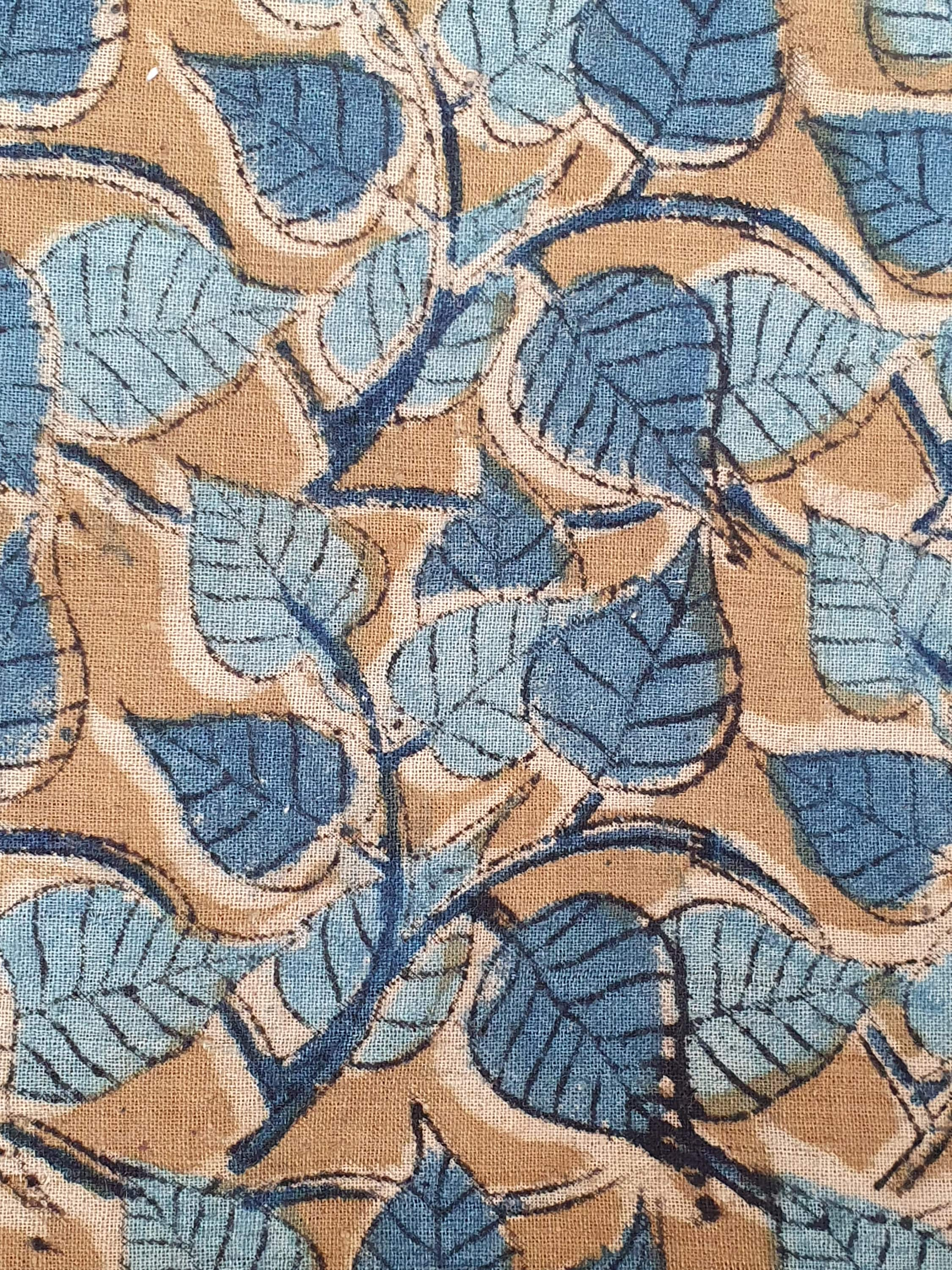
Kalamkari fabric with natural dyes ( indigo, yellow and green) on cotton ( 1 yard)
$19.90 · In stock
Kalamkari Fabric with green and yellow dyes on cotton lint. Please refer to video for the colour Width: 45 inches / 112.5 cm Thread count : 27 Weight : 120 gm / meter Reed / Pick : 60 / 46 – 54 Natural dyes (Blue : Indigofera Tinctoria; Green : pomegranate, myrobalan and kasimi ; Yellow : pomegranate& myrobalan) The fabric is of the highest quality and can be home washed . Please feel free to message us if you have any queries. Single piece and longer uncut fabric available. FREE Shipping within the United Kingdom FREE Shipping to the US on order above $35
Fabric specifications and care
- Material and colouring
- Cotton fabric with Kalamkari done in natural dyes (indigo, yellow and green)
- Weight (GSM)
- 120 g/m²
- Width
- 44 inches
- Hand feel
- This is a medium-weight, slubbed cotton (approximately 160–180 GSM) with an open, relaxed weave visible in the images; it feels soft in the hand but has enough body to hold a silhouette. The surface shows gentle textural variation where the dyes pool and resist, giving a slightly crisp but comfortable drape. It hangs well for unlined garments and keeps printed detail without being clingy.
- Drape rating
- 3/5
- Transparency
- Semi-Sheer
- Suggested uses
- ✦ Ideal for Casual button-up shirts and blouses; unlined shirt-dresses and wrap dresses; gathered or A-line midi skirts; cushion covers and decorative pillow shams; simple market totes and lightweight bags. These uses suit the fabric because the medium weight, visible weave and natural-dye surface are perfect for unlined, relaxed garments and home pieces that benefit from texture and printed detail. ✦ Also suitable for Children’s dresses and tops with minimal seams (recommend pre-washing); lightweight lined skirts or dresses (use a cotton lawn lining); soft home accessories such as table runners or placemats (backing recommended); summer pyjama sets with the addition of a lightweight facing or stay — all work well with minor lining or reinforcement. ✦ Not recommended for Tailored, structured jackets or suiting; heavy upholstery (sofas, high-wear chairs); swimwear or stretch garments; heavily used utility bags without reinforcement — these require sturdier, more stable or technical fabrics.
- Care instructions
- Wash separately first, cold gentle cycle or hand-wash; do not use bleach. Line dry or lay flat in shade; iron on a medium cotton setting while slightly damp or use steam. Store folded away from direct sunlight to avoid gradual fading of natural dyes.
- Washing and shrinkage
- Hand-wash or machine-wash gently on cold (30°C) with mild detergent and similar colours; expect natural cotton shrinkage of approximately 3–5% on the first wash and some initial indigo crocking — pre-washing before cutting/sewing is strongly recommended.
- Craft story
- This cloth is hand-printed Kalamkari made in the traditional villages of Andhra Pradesh by a small cooperative of craftspeople who still use wooden blocks and hand-brushed outlines. Each yard is naturally dyed with fermented indigo, plant yellows and leafy greens, then layered and fixed by time-honoured techniques. The result is a warm, slightly textured cotton where the subtle irregularities and soft tonal shading are part of the artisan’s signature. What makes it special is that every length carries the fingerprint of slow, vegetable-dye work — no two pieces match exactly.
- Colour notes
- The palette is a soft, muted indigo on a warm tan ground with touches of leafy green — colours show subtle tonal variation from dye absorption and hand application. Under natural light the indigo reads richer and cooler; under artificial warm light the tan ground becomes more pronounced, giving the print a lived-in, vintage patina.
- Additional notes
- Please note: natural dye colours may vary slightly between batches and the indigo may crock on first wash — this is part of the handmade character of our fabrics. We recommend pre-washing before cutting to allow for initial shrinkage and colour settling.